# Justin Martyr on Malachi
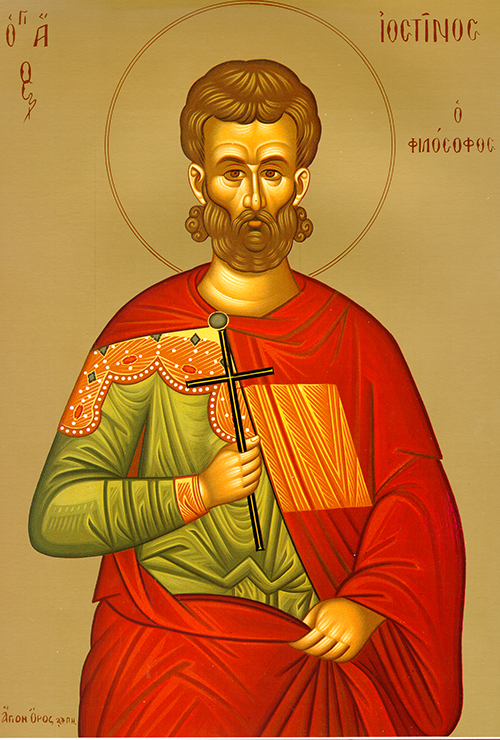
-
A look at Justin Martyr's view of Malachi's prophecy being fulfilled in the Eucharistic sacrifice while Protestants spiritualize the words akin to Judiaism down to this day.
In his Dialogue with Trypho (Chapter 41), Justin Martyr explains Malachi 1:11 as a prophecy foretelling the Christian Eucharist offered by Gentiles worldwide, in contrast to the rejected Jewish sacrifices. He writes:
> Hence God speaks by the mouth of Malachi, one of the twelve [minor prophets], as I said before, about the sacrifices at that time presented by you: “I have no pleasure in you, says the Lord, and I will not accept your sacrifices at your hands; for, from the rising of the sun unto the going down of the same, My name has been glorified among the Gentiles, and in every place incense is offered to My name, and a pure offering: for My name is great among the Gentiles, says the Lord: but you profane it.” He then speaks of those Gentiles, namely us, who in every place offer sacrifices to Him, i.e., the bread of the Eucharist, and also the cup of the Eucharist, affirming both that we glorify His name, and that you profane it.
**Side-by-side comparison** of Justin Martyr’s interpretation of Malachi 1:11 with the non-Eucharistic Protestants.
| Aspect | **Justin Martyr (c. 150 AD)** | **Protestant Spiritual-Worship View** |
|--------|-------------------------------|---------------------------------------|
| **Text of Malachi 1:11** | “From the rising of the sun to its setting my name is great among the nations, and **in every place incense is offered to my name, and a pure offering**…” | Same text, but **θυσία καθαρά** (“pure offering”) is **metaphorical**. |
| **What is the “pure offering”?** | **Literal**: The **Eucharist** — bread and cup offered as a sacrifice in Christian assemblies worldwide. | **Metaphorical**: **Prayer, praise, and holy living** (Heb 13:15; Rom 12:1). |
| **Who offers it?** | **Gentiles** (Christians from the nations), replacing the Jews whose sacrifices God rejects (Mal 1:10). | **Gentile believers**, but no priestly class — every Christian is a priest (1 Pet 2:9). |
| **Where is it offered?** | **In every place** (ἐν παντὶ τόπῳ) — fulfilled in **Christian altars** in house churches across the Roman Empire. | **In every place** — fulfilled in **daily life**, homes, gatherings — **no physical altar needed**. |
| **How is it a sacrifice?** | **Real, unbloody sacrifice** (ἀναίμακτος θυσία) — the bread and wine become the body and blood of Christ (per Justin’s *First Apology* 66). | **Spiritual sacrifice only** — Christ’s sacrifice is **once-for-all** (Heb 10:10); no re-presentation. |
| **Incense (θυμίαμα)** | **Literal or symbolic**: Either the **prayers** rising with the Eucharist, or the **Eucharistic offering itself** (smoke of incense = sacrifice). | **Prayer** (Psalm 141:2; Rev 5:8). No literal incense or altar. |
| **Relation to Jewish sacrifices** | **Replaced**: God rejects Jerusalem’s altar (Mal 1:10) but accepts the **Christian altar** everywhere. | **Fulfilled and ended**: Temple system obsolete; **spiritual worship** is the new reality (John 4:21–24). |
| **Key Proof-Texts** | - Malachi 1:10–11
- Didache 14 (pure sacrifice = Eucharist)
- Psalm 96:7–8 (Gentiles bring offerings) | - Hebrews 13:15 (“sacrifice of praise”)
- Romans 12:1 (“living sacrifice”)
- John 4:23 (“worship in spirit and truth”) |
| **Liturgical Setting** | **Lord’s Day Eucharist** in a structured assembly with bishop/priests. | **No fixed liturgy required** — can be individual or corporate, formal or informal. |
| **Historical Fulfillment** | **Already happening** in Justin’s time: Christians in Rome, Antioch, Alexandria, etc., offer the Eucharist daily or weekly. | **Ongoing** in the global church’s worship, missions, and obedience. |
### Justin’s Core Argument
In his own words, condensed:
> “God **anticipated** that **we Gentiles** would offer Him a **pure sacrifice in every place**… He speaks thus: *‘In every place incense is offered to My name, and a pure offering.’* **We offer this very sacrifice** — the **bread and the cup** — **in the Eucharist**, and we **glorify His name**, while **you [Jews] profane it** by rejecting Christ.” (*Dialogue with Trypho* 41, cf. 117)
### Key Difference in One Sentence
- **Justin**: Malachi 1:11 is **literally fulfilled** in the **Eucharist** offered on **Christian altars** worldwide.
- **Protestant**: Malachi 1:11 is **spiritually fulfilled** in the **praise and obedience** of **all believers** everywhere.
### Which Holds Up Better
- **Justin’s view** dominates **1st–4th century** Christian exegesis (Didache, Irenaeus, Cyprian, Augustine). Linguistically, **θυσία + θυμίαμα** strongly suggests **cultic sacrifice** — favoring Justin.
- **Protestant view** emerges with the **Reformation** (16th c.) as a reaction against Catholic Eucharistic theology. Theologically, **Hebrews 13:15** supports the Protestant metaphor — but **never cites Malachi 1:11**.
### Conclusion
Justin sees a **new literal altar**; Protestants see a **new spiritual worship**. Both claim Gentile universality — but **only one sees bread and wine on the table** 🍞🍷.